Posts

Showing posts with the label Indian

Tomato Ketchup

Image
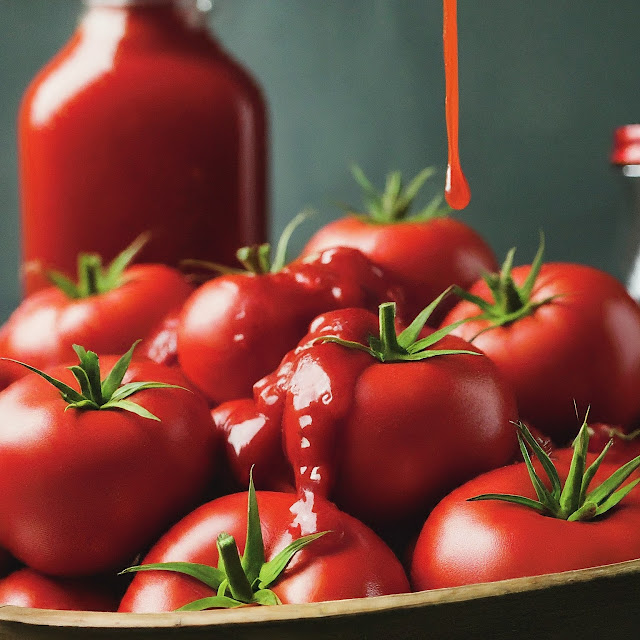
  Various varieties of Tomato Ketchup have been around since the first one was published in a cook-book by James Mease in 1812 more than 200 years ago. American cooks later started adding sugar to ketchup in the early 20th century. It was the F&J Heinz company that started selling ketchup in 1876 and made it the household item it is today by the early 1900s. Since Sodium Benzoate was banned in 1906 for use as a preservative, the current version of ketchup using sugar & vinegar as natural preservatives was developed. Like every year, I sowed hybrid tomato seeds in my kitchen garden, and I maintain 20 plants which yield up to 5kg per plant easily. Since the past 3 years, to preserve these high-quality organic home-grown tomatoes, I started making ketchup so that it may be stored for up to 6 months easily. Mind you, this recipe is lengthy, easy to get wrong and tedious, so not for the faint of heart. This recipe also uses onions & garlic, but they are optional.   Prep...

Veg Biryani

Image
It is said that Biryani is India's most preferred take-out or order at home dish. This has to do with the general notion that biryani is very difficult to make and must be ordered from a restaurant to save the hassle. Even those who do make it at home reserve it for very special occasions.       Here we will be learning a relative quick and easy way of making Biryani but with vegetables. There basically two types of Biryani i.e. Kacchi & Pakki. In Kacchi Biryani, layers of marinated meat or vegetables with alternating layers of partially cooked rice and condiments are steamed and cooking happens by the ingredient's own moisture for at least an hour. A yoghurt based marinade at the bottom of the cooking pot provides additional moisture and flavor. Potatoes are in the bottom most layer (borrowed from Iranian cuisine) and provide moisture for cooking.      In pakki Biryani which we shall be making, the meat or in this case vegetable and rice...

Chettinad Spice Mix

Image
  Chettinadu is the land of  the Chettiars who are the mercantile, weaving & agricultural people to the south of India mainly in the states of Tamil Nadu & Kerala. Chettinad cuisine is the cuisine of the Nattukotai Chettiars or Nagarathars. In addition to the traditional Southern Indian Staples like Coconut, Legumes & Pulses, during their centuries of participation in the spice trade, the people of Chetiinad added many spices to their cuisine like Indonesian Nutmeg, Ceylon Cinnamon, Madagascar Cloves, Tellicherry Pepper and sometime even blue Ginger from Vietnam & Laos. Chettiars were traditionally vegetarian, and to this day, their traditional & festive feast remain vegetarian. Centuries over centuries of delicately mixing & layering spices, we got the our beloved Chettinad Spices Mix which can be used in a variety of vegetarian and non-vegetarian dishes.    I always recommend getting the choicest whole spices from your trusted market and mak...

Classic Green & Red Chutney

Image
This is additional blog Post to Complement other Recipes that may use Green & Red Chutneys in them and the recipes for the chutneys have been outsourced to this article. The Classic India Green & Red Chutney or "Tikhi" & "Mithi" chutney are used as finishing ingredient in many Indian Dishes, Street & Fast Food items.  I myself use them in many recipes and so I am sharing my own versions of these classics. Prep Time: 10 mins (for Both Red & Green Chutney) Cook Time: 15 mins (For Red Chutney) Ingredients: This recipe makes about 150g of each chutney. For Red Chutney: Tamarind Paste - 1 Table Spoon Jaggery - 75gms Salt to taste Pinch of Red Chilli Powder Pinch of Cumin Powder For Green Chutney: Coriander - 50 gms Tomatoes - 100 gms Mint Leaves - 5-10 Green Chilies - 2 Pinch of Salt Pinch of Asafoetida Pinch of Cumin Procedure: For the Green Chutney all you  have to do is grind all the ingredients in to a corase paste. Check the level of salt once be...

Tea-Chai Masala

Image
  Every Tea Lover in India has their own version of masala tea. Using a premade spice mix is also a very popular rand easy way to make masala tea.  Ingredients and Proportions: The general ingredients are as follows: Fennel Seeds - 1 Tbsp Green Cardamom - 1 Tsp  Black Pepper - 1 Tsp Cinnamon Sticks -1 inch stick Cloves - 5 pieces Dried Ginger - 2 inch Piece Saffron - 1 inch Salt - 1 pinch Tea Masala is made in two major variations that one for winter & one summer. I will tell you what to change in each version at the end but first lets play taste maker !! Procedure: The procedure after calculating & collecting all of the above ingredients in required mentioned proportions is quite simple. We have to dry roast the ingredients in a pan just enough to relieve them of their moisture. Dry roasting also helps in releasing the flavorful essential oils in the spices and makes them easy to grind. Try not to over roast the ingredients as this depletes the essential oils in ...

Paav Bhaji Masala

Image
  Paav Bhaji is a dish that carries the vibrant flavours of Mumbai to every corner of the world. With its many variations and garnishes, its soul remains unchanged—a rich, spicy gravy of mashed potatoes and vegetables, generously cooked in butter. It is interesting to note that a dish so distinctly Indian owes several of its core ingredients to the Portuguese, who introduced them from the Americas. Even the quintessential paav derives its name from the Portuguese word pão , meaning bread. This fusion of influences is what gives Paav Bhaji its unique character. While healthier, home-style versions of Paav Bhaji are prepared across India, one element remains constant—the heart of the dish itself: Paav Bhaji Masala. I always recommend sourcing the finest whole spices from a trusted market and grinding them fresh at home. This not only ensures purity but also delivers a depth of flavor that store-bought blends simply cannot match. With that in mind, let us learn how to prepare auth...

Litti Chokha/Bati Chokha

Image
     Originating from the state of Bihar, Litti, Bati or Bhawri is as famous all over India as Dhokla from Gujrat or Samosa from Punjab. Generally had with Chokha(A dish on its Own) Litti-Chokha comprises of a full meal with carbs in the form of wheat floor, proteins in the form of roasted Bengal gram floor & fat in the form of added Ghee on top.        Litti is also very popular in Eastern Uttar Pradesh & Jharkhand too. Given its humble origins & pocket friendly ingredients, Litti became the staple for the working class. And also given the fact that it can be made over a campfire with minimal ingredients and good its good shelf life, it became the go to food for travelers & wayfarers.         Traditionally Littis are made over a campfire, or in a makeshift oven fired with charcoal or Cow-dung Cakes. You wouldn't want to start a campfire in your kitchen just for the recipe, so we are going to make Litt...